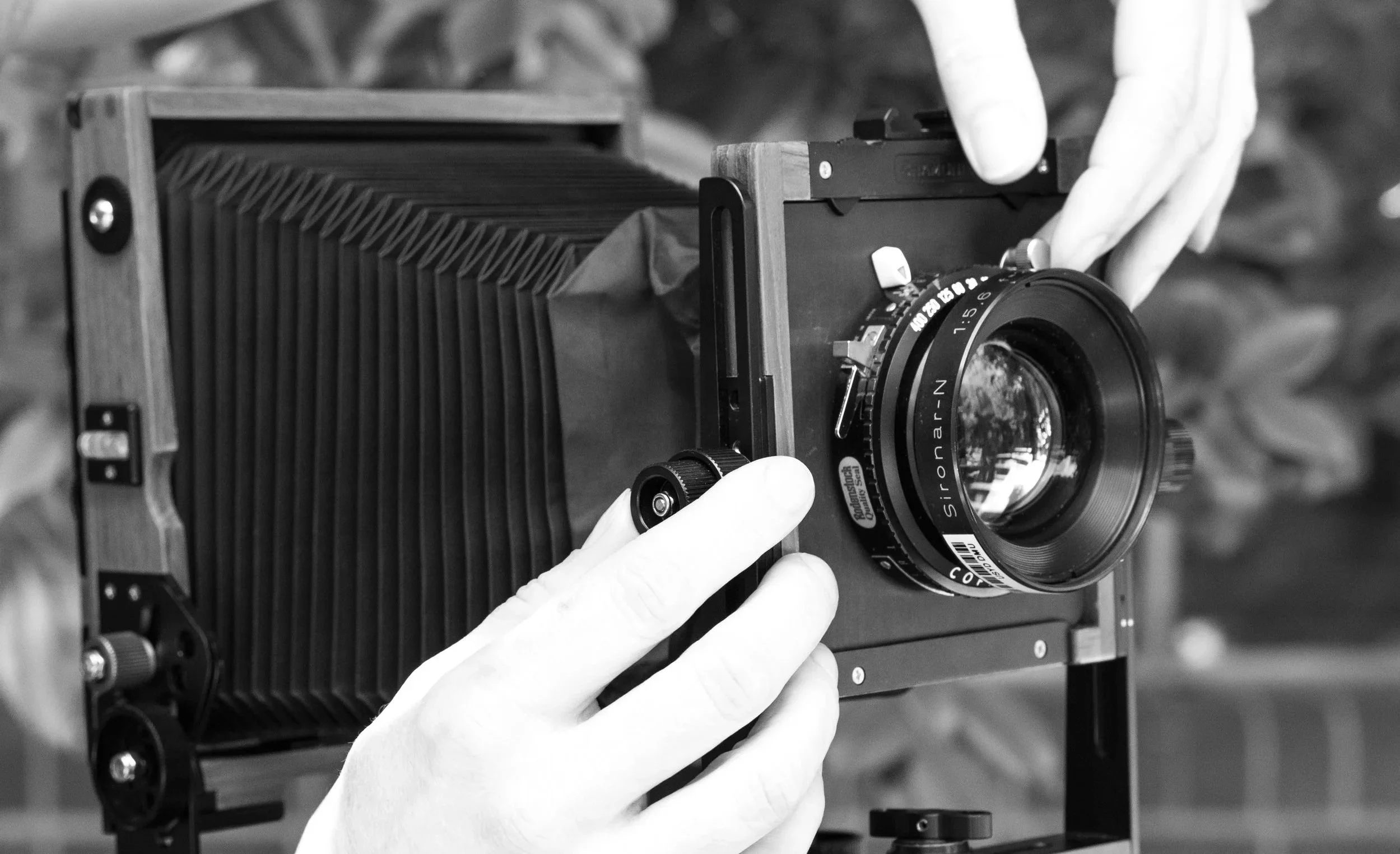
Imaging Sustainability is a collaborative project between researchers from the University of Sydney and The Darkroom Social.
We’re rethinking the environmental impact of analogue & digital photographies. Our goal is to transform image-making into an environmentally responsible practice by reducing chemical toxicity and promoting sustainable alternatives. Our research addresses these challenges head-on, promoting ethical, informed image-making for artists, educators, and the global photography community.
Our Research
Despite their reputation as sustainable alternatives, plant-based developers may produce significant silver nanoparticle waste, posing risks to water systems and soil health.
Our research investigates the environmental impacts of photographic practices, focusing on both digital and analogue methods.
While digital photography is often considered immaterial, it depends on extractive industries, energy-intensive data centres, and water-reliant cooling systems. Analogue photography, by contrast, involves chemical processes that can introduce pollutants into ecosystems.


Through our partnership with SSSHARC through their Research Impact Accelerator (RIA), we are critically examining the ecological footprint of plant-based 'eco-developers', a growing alternative in analogue photography. These developers are promoted as sustainable, yet our preliminary analysis reveals they may generate silver nanoparticle waste, which poses risks to aquatic systems and soil integrity.
Our work contributes to emerging conversations around sustainable image-making by integrating chemical analysis, visual arts methodologies, and community engagement. We aim to challenge assumptions and inform more ecologically responsible practices in photographic production.
Our Work

-
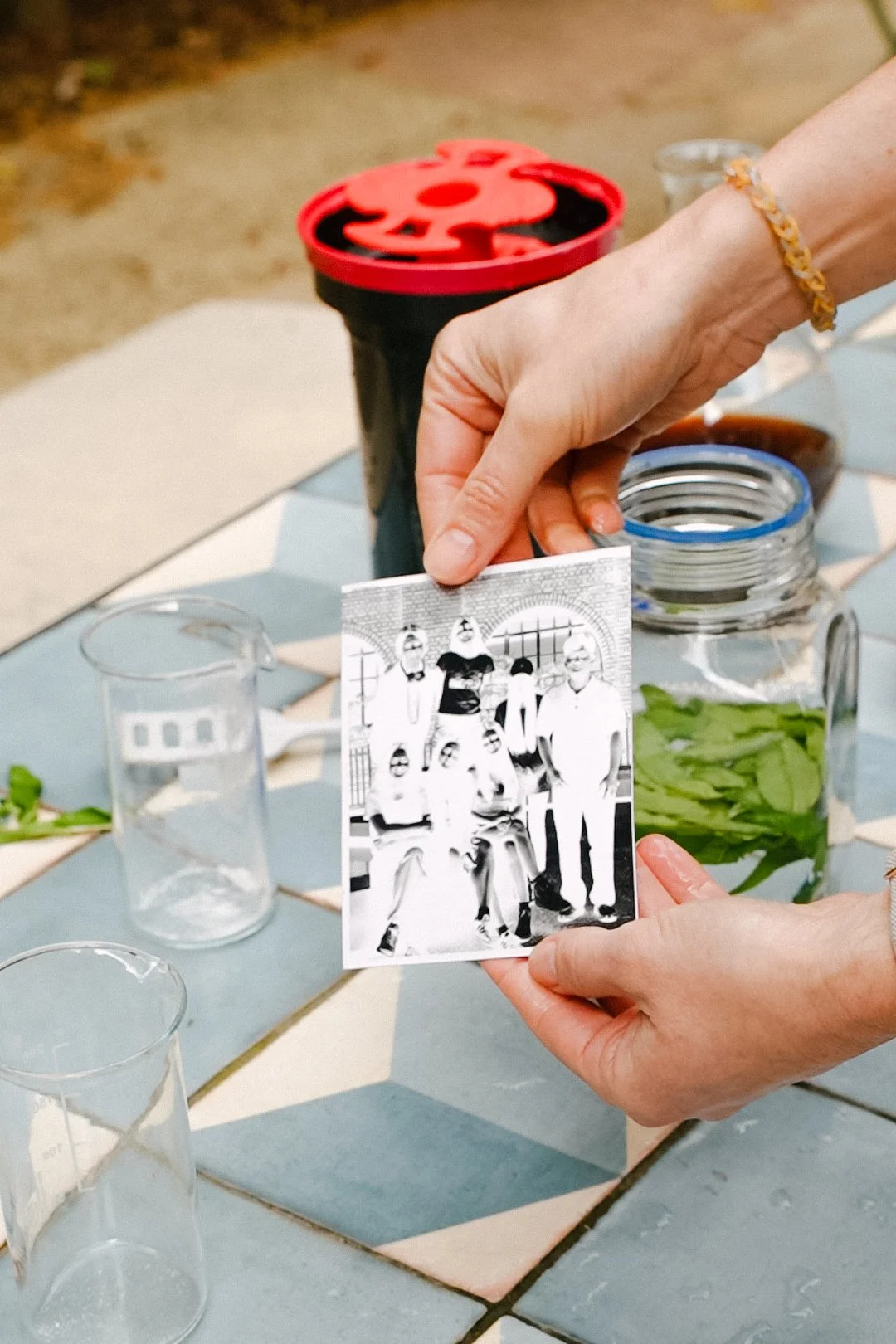
Part of our collaborative research has been testing the chemical composition of used plant-based or ‘eco’ photographic developers.
For our USYD Community Festival event in 2025 we created a developer using campus waste trimmings of ornamental pomegranate and camellia. This was the solution used to process the 4×5 paper negative portraits made during the festival.
-
While plant-based solutions are promising, they can still produce silver nanoparticle waste. We’re developing validated protocols to manage this responsibly.
-
Our social enterprise partner The Darkroom Social run community workshops teaching the public how to work with a variety of analogue photographic processes in safer and more environmentally conscious ways. You can follow them on Instagram or Humanitix to be notified when future workshops are launched.
Our Team
Our interdisciplinary team consists of members from The University of Sydney’s School of Chemistry (Dr Alexander Yuen), Sydney College of the Arts (Dr Yvette Hamilton) and our social enterprise partner The Darkroom Social (Isobel Markus-Dunworth & Remi Siciliano).
This collaborative team has been developed and supported through SSSHARC’s Research Impact Accelerator.

-
Senior Lecturer: Sydney College of the Arts
Yvette is an artist, researcher, and educator whose work explores the material and conceptual dimensions of photography across historical and contemporary contexts.
-
Senior Lecturer: School of Chemistry.
Alex explores new catalytic methods and processes for the conversion of purpose grown biomass and carbon wastes (lignin and plastic) into biofuels and platform chemicals.
-
Co-Founder: The Darkroom Social.
Isobel is an artist and educator whose research explores the material potential of photography, investigating Australian seaweeds as sustainable alternatives for photographic chemistry and substrates.
-
Co-Founder: The Darkroom Social.
Remi is an artist whose practice is grounded in experimental analogue photography and its intersections with ecology and place. They investigate how the responsive nature of these materials can facilitate collaborative experiments and encounters within local sites.
Our Partners